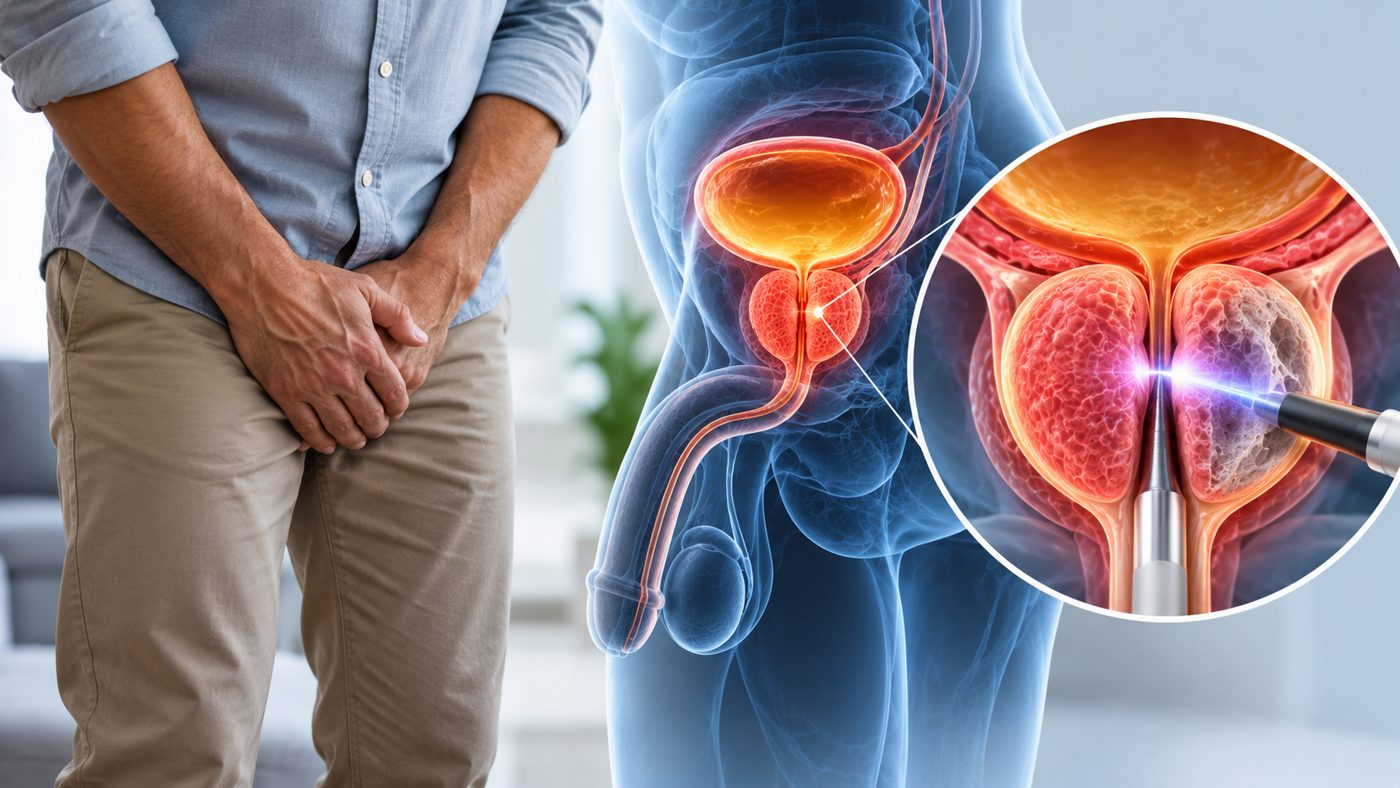


Pain between the scrotum and the anus, discomfort after ejaculation, or recurring burning while tests show no infection: symptoms like these can send a man from one antibiotic to the next. But the word "prostatitis" covers several different conditions, and some of them aren't caused by bacteria at all. Reaching the right diagnosis protects you from long courses of treatment that don't address the real cause.
Acute infection needs prompt attention
Acute bacterial prostatitis can cause fever, chills, pain and difficulty passing urine. It needs urgent assessment and may require a hospital stay if the illness is severe or there is urinary retention. Urine tests, a urine culture and other tests are used depending on the case, and a suitable antibiotic is chosen. Prostate massage is not performed when acute infection is suspected.
What about symptoms that last for months?
There may be a chronic bacterial infection, or the condition may be chronic pelvic pain syndrome. In chronic pelvic pain syndrome, no bacterial infection is found to explain the symptoms, and sensitised nerves, tight pelvic floor muscles, and urinary and psychological factors can all play a part. Stress having an effect doesn't mean the pain is imaginary; it helps identify what makes it worse.
Treatment based on what the assessment shows
The plan may include medicines for urinary symptoms or pain, specialist pelvic floor physiotherapy, and changes to activities that increase the discomfort. Exercises need to be chosen after assessment: tight muscles may benefit from learning to relax rather than automatically doing more tightening exercises. Antibiotics are used when there is an infection or a specific medical reason.
How you can help reach a better plan
Keep a record of where the pain is and how it relates to passing urine, ejaculation and sitting, along with the medicines you have tried and for how long. Cutting down on stimulants such as caffeine may help if they make symptoms worse, as may avoiding long periods sitting on the painful area and staying active in a way that suits your condition. Your doctor will set follow-up visits to measure progress and adjust the plan.
When to rethink the diagnosis
Blood in the urine, unexplained weight loss, fever or urinary retention need their own assessment. And if you aren't improving, the diagnosis should be reviewed rather than the same prescription repeated. Treating chronic pain can take time, but it should be built on clear goals and a response that can be measured.
This article is general health education and doesn't replace a consultation with your doctor.