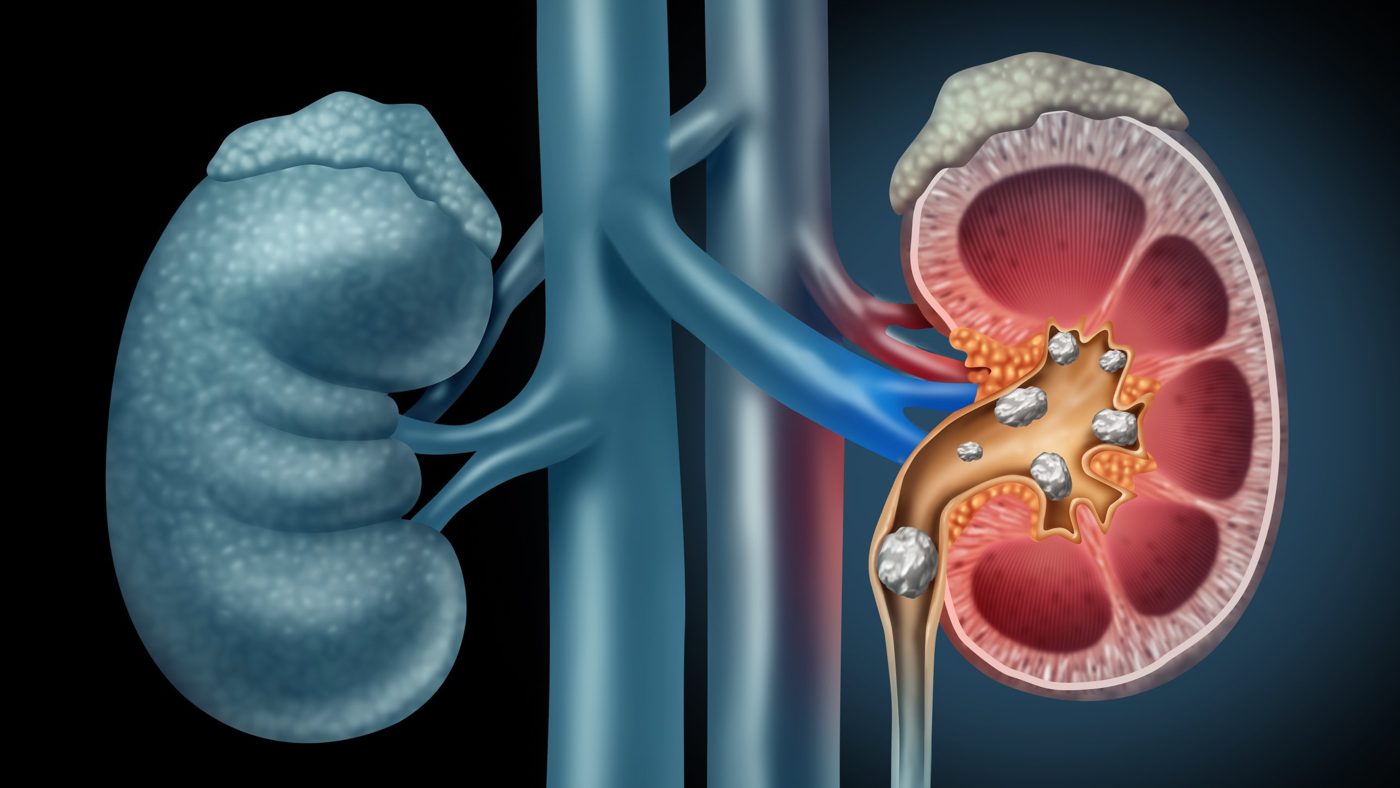
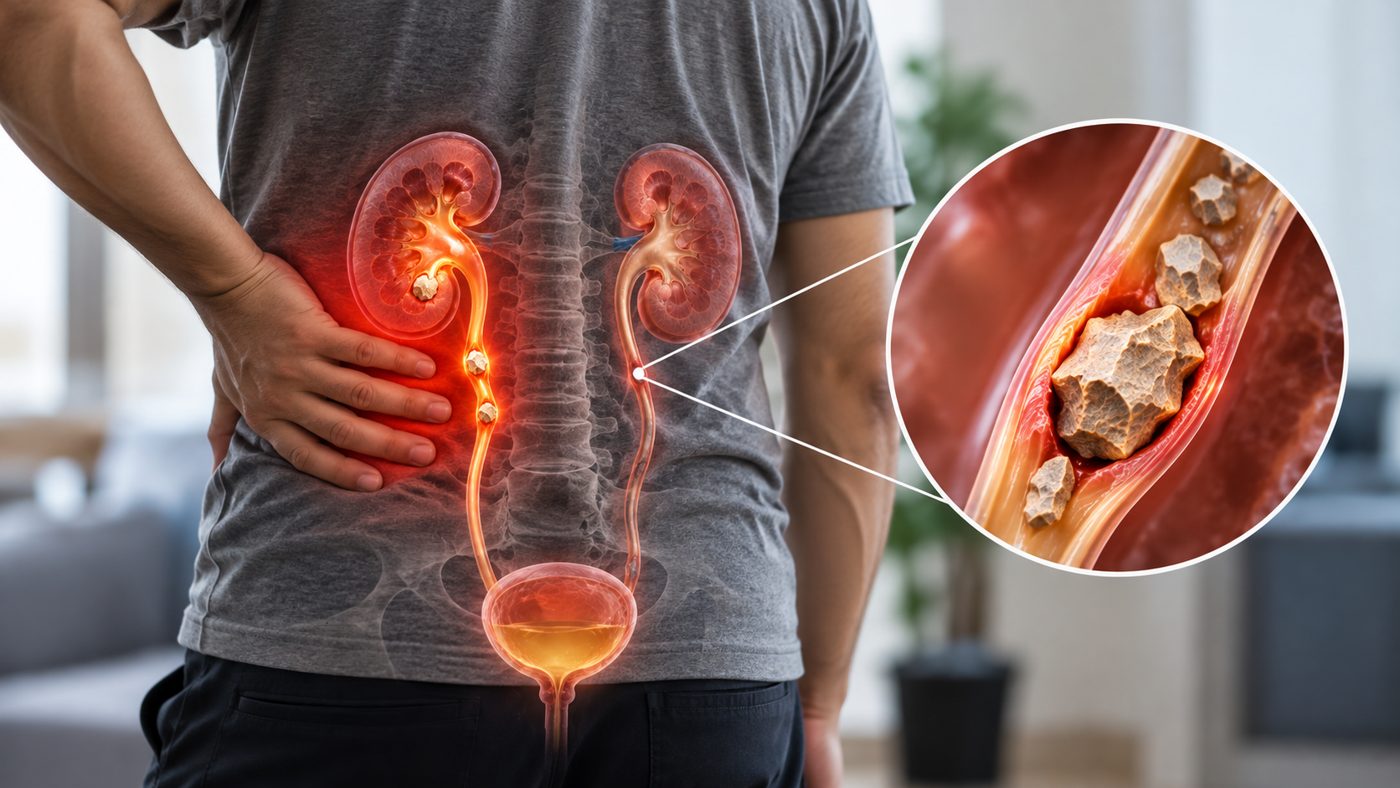

A stone may be found by chance, or announce itself with sudden pain that sends you to the emergency department. The word "stone" is the same, but the treatment plan can be completely different from one person to the next. The stone's size and position, its effect on urine drainage, any infection, and how well the kidneys are working all decide whether it is safe to wait or whether treatment is needed.
When waiting is an option
Some small stones in the ureter pass on their own, and can be managed with monitoring, pain relief and a clear follow-up plan. Specific medicines may help selected stones pass, particularly those in the lower part of the ureter. But monitoring doesn't mean leaving the stone without imaging or without confirming that the blockage has cleared: the pain going away doesn't prove the stone has passed.
How the treatment methods differ
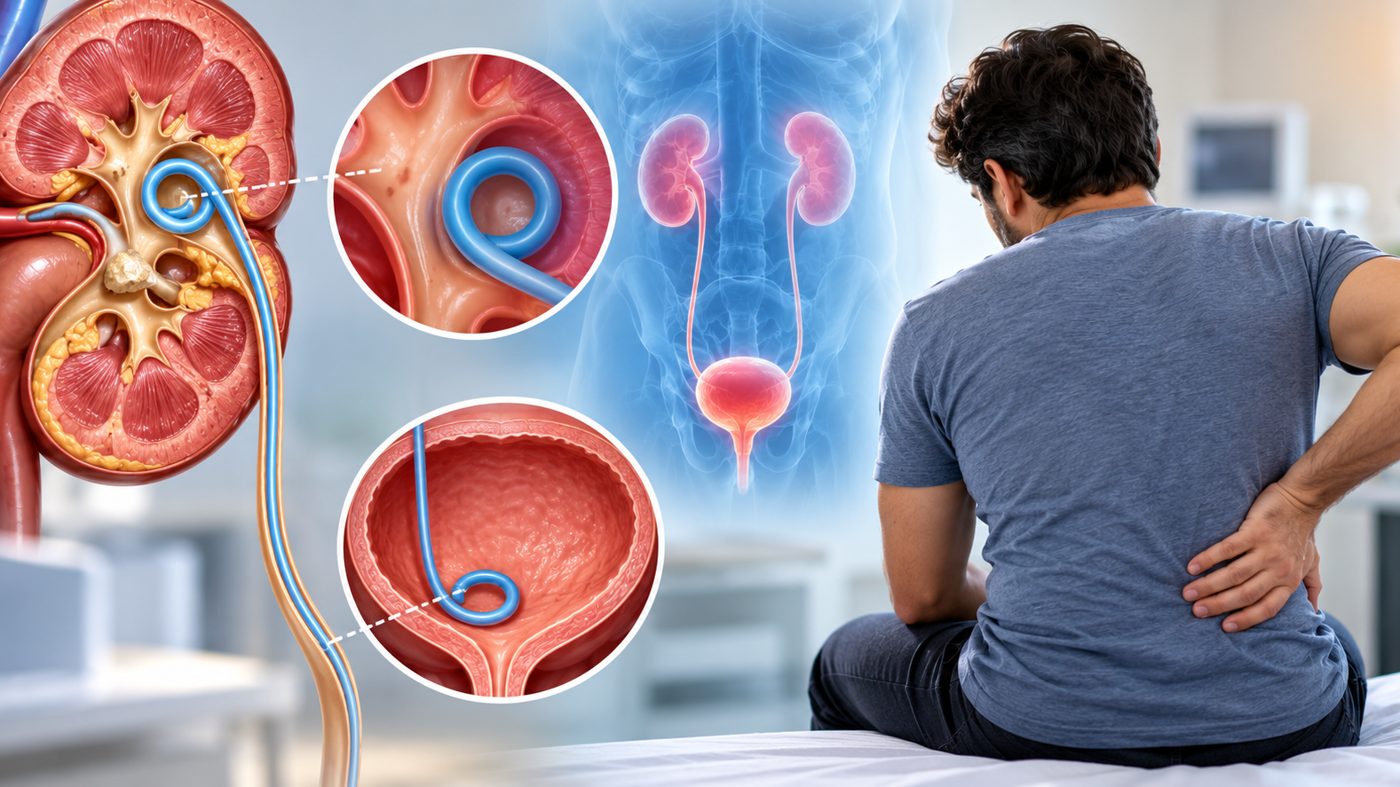
Shock-wave lithotripsy uses energy from outside the body to break the stone up, and the fragments then have to pass out in the urine. Ureteroscopy, with a rigid or flexible scope, reaches the stone through the urinary tract, where it is broken up with a laser or its fragments removed. A temporary ureteric stent may be placed, depending on the circumstances of the procedure.
Large or complex stones sometimes need to be removed through a small tract made through the skin into the kidney (percutaneous nephrolithotomy). For kidney stones larger than about two centimetres, this is usually discussed as a main option, taking the patient's anatomy and general health into account.
Can every stone be dissolved?
Some uric acid stones can be dissolved by changing the acidity of the urine under medical supervision. But the common calcium stones don't dissolve simply by drinking water or lemon juice. Be wary of sweeping claims for products that "dissolve all stones".
When a stone becomes an emergency
Fever or chills together with a urinary blockage need urgent assessment, and may require draining the urine with a stent or a tube through the skin, with antibiotics, before the stone itself is treated. Passing very little urine, or pain that can't be controlled, also needs urgent review.
Before treatment, ask about the chance of clearing the stone in a single session, whether you will need a stent and how it will be removed, and which tests will confirm the treatment has worked. These details make the decision clearer and the recovery better organised.
This article is general health education and doesn't replace a consultation with your doctor.