
Some men discover a varicocele while being assessed for difficulty conceiving; others find it because of heaviness or pain in the scrotum. Having a varicocele doesn't mean every man will be infertile, and seeing one on an ultrasound scan doesn't automatically make surgery necessary. The decision depends on the examination, your symptoms, your semen analysis results and your plans for having children.
How a varicocele can have an effect
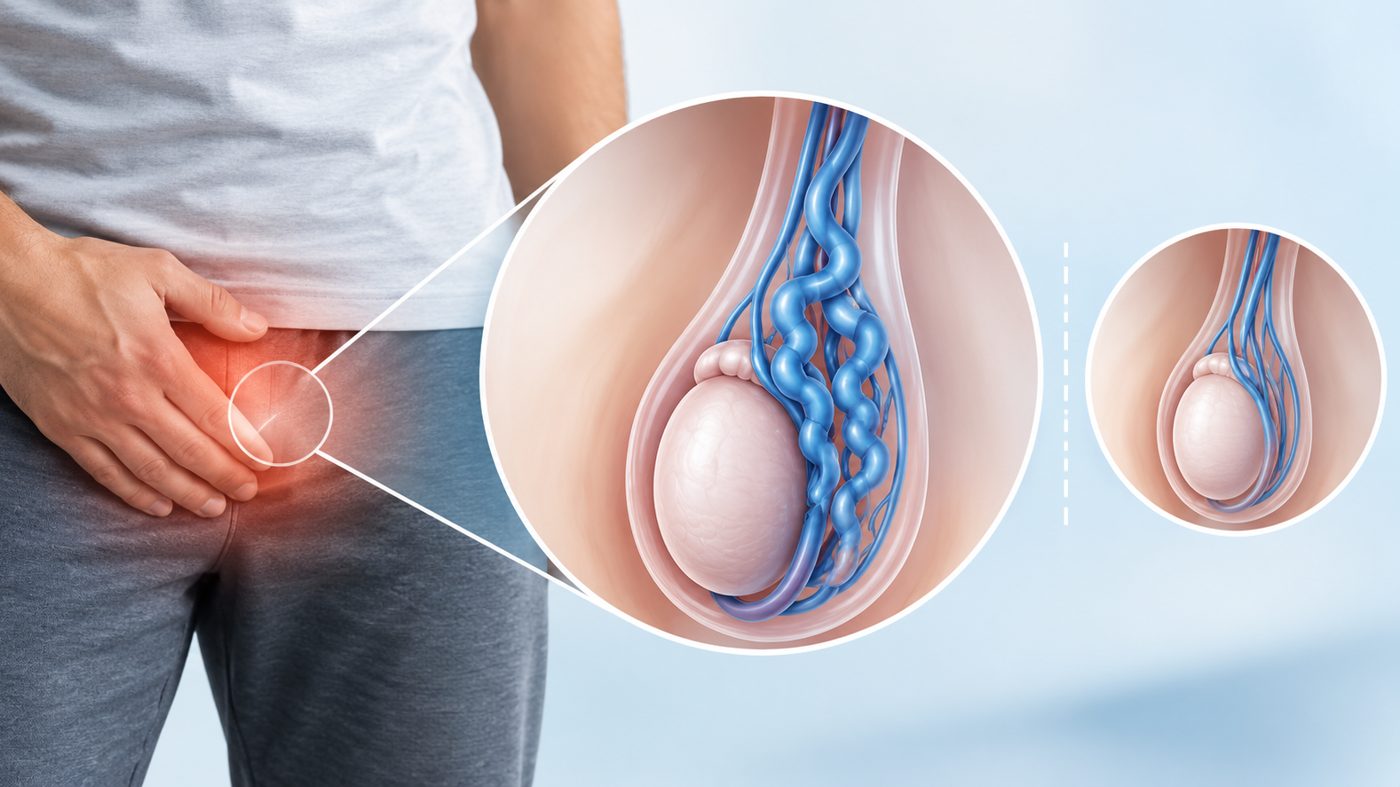
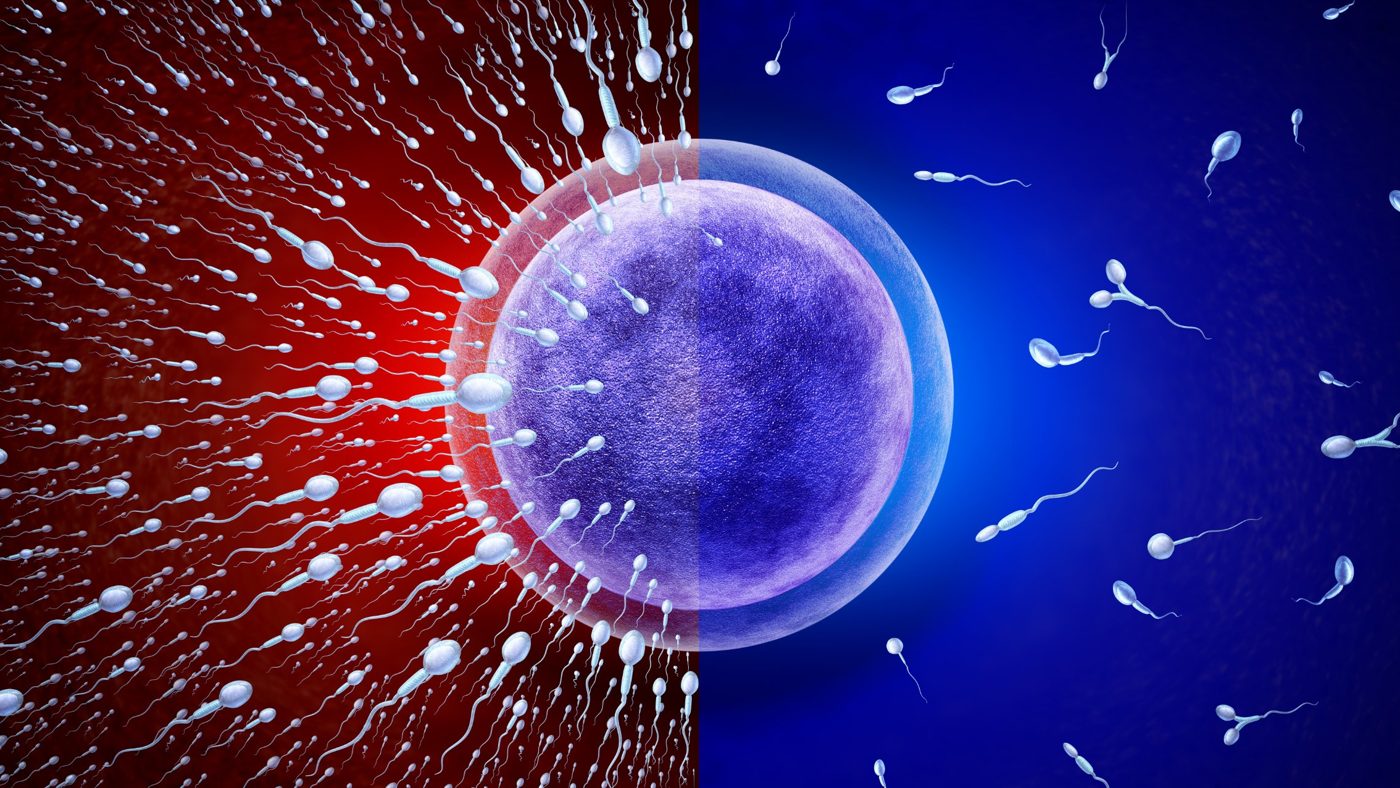
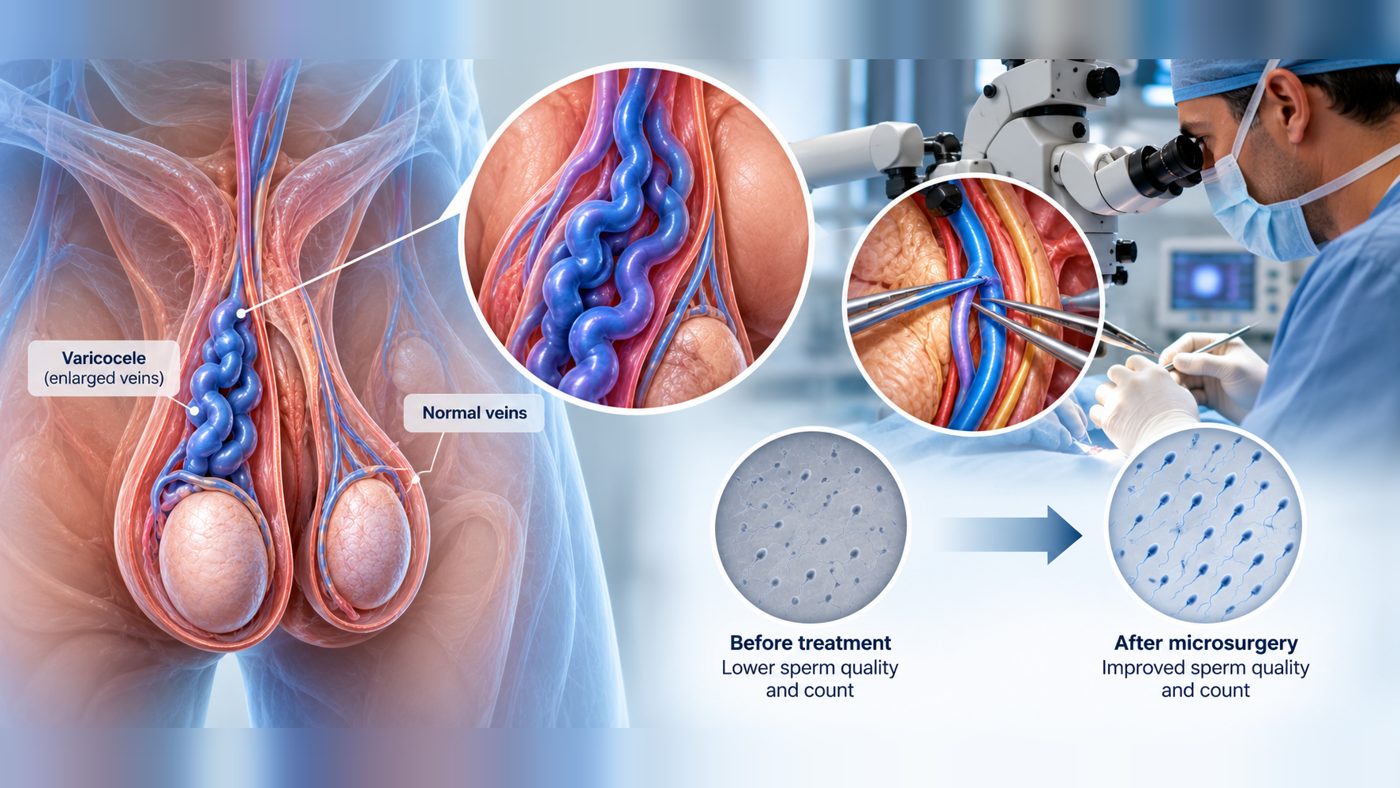
A varicocele is an enlargement of the veins around the testis, and it is more common on the left side. It may be linked to a higher temperature and a less favourable environment for sperm production. Even so, many men with a varicocele have no symptoms and no significant effect on their fertility, so its real impact needs to be assessed rather than treating a scan image on its own.
When repair is considered
Treatment is usually discussed when the varicocele can be felt on examination, there is difficulty conceiving and the semen analysis is abnormal, taking into account the female partner's assessment and the time available. It may also be considered for persistent pain attributed to the varicocele once other causes have been ruled out. A varicocele that can't be felt and is only seen on imaging isn't routinely repaired to improve fertility.
The role of the microscope
The problem veins are tied off while preserving the testicular arteries, lymphatic channels and other important structures. The magnification of the operating microscope helps tell these structures apart, and a Doppler probe may be used during surgery to locate the artery. Other options exist, including closing the veins from inside with a catheter (embolisation) in suitable cases.
The risks include fluid collecting around the testis (hydrocele), the varicocele persisting or coming back, bleeding, infection and, rarely, injury to important structures. These depend on the method used, the team's experience and the details of your case.
When improvement shows
The result of the operation isn't measured within days. A semen analysis is usually repeated after about three months, with further follow-up depending on the response. Count or motility may improve in some patients, but a better result doesn't guarantee pregnancy, because the chance of conceiving depends on both partners.
Before surgery, it helps to agree on a clear goal: relieving pain, improving the semen analysis, or supporting the chance of pregnancy. When there are no sperm at all in the semen (azoospermia), weighing the benefit is more complex, and a patient shouldn't be promised that repairing the varicocele will definitely avoid the need for sperm retrieval from the testis.
This article is general health education and doesn't replace a consultation with your doctor.