
After a bladder tumour is removed with a scope (transurethral resection, or TURBT), the natural question is: "Is the treatment finished?" The answer depends on the pathology report, not only on removing the part that could be seen. Different tumours can look alike through the scope yet need completely different plans, depending on their grade, how deeply they have grown and other risk factors.
Three key points in the report
Your doctor looks at the type of tumour, its grade, which reflects what the cells look like, and its stage, which shows how far it has grown into the bladder wall. Whether the sample includes bladder muscle also matters, because that may be needed to confirm the stage. Other factors, such as carcinoma in situ (a flat, non-raised cancer) or particular tissue patterns, can also influence the decision.
Why the resection may be repeated
A repeat resection may be recommended when the tumour wasn't completely removed, for stage T1 tumours, or when the sample lacks muscle that is needed to assess the stage, with certain exceptions. When it is indicated, the repeat resection is usually done within two to six weeks. Its aim is to remove any remaining tumour and stage the cancer more accurately before the next treatment is chosen.
Treatment inside the bladder
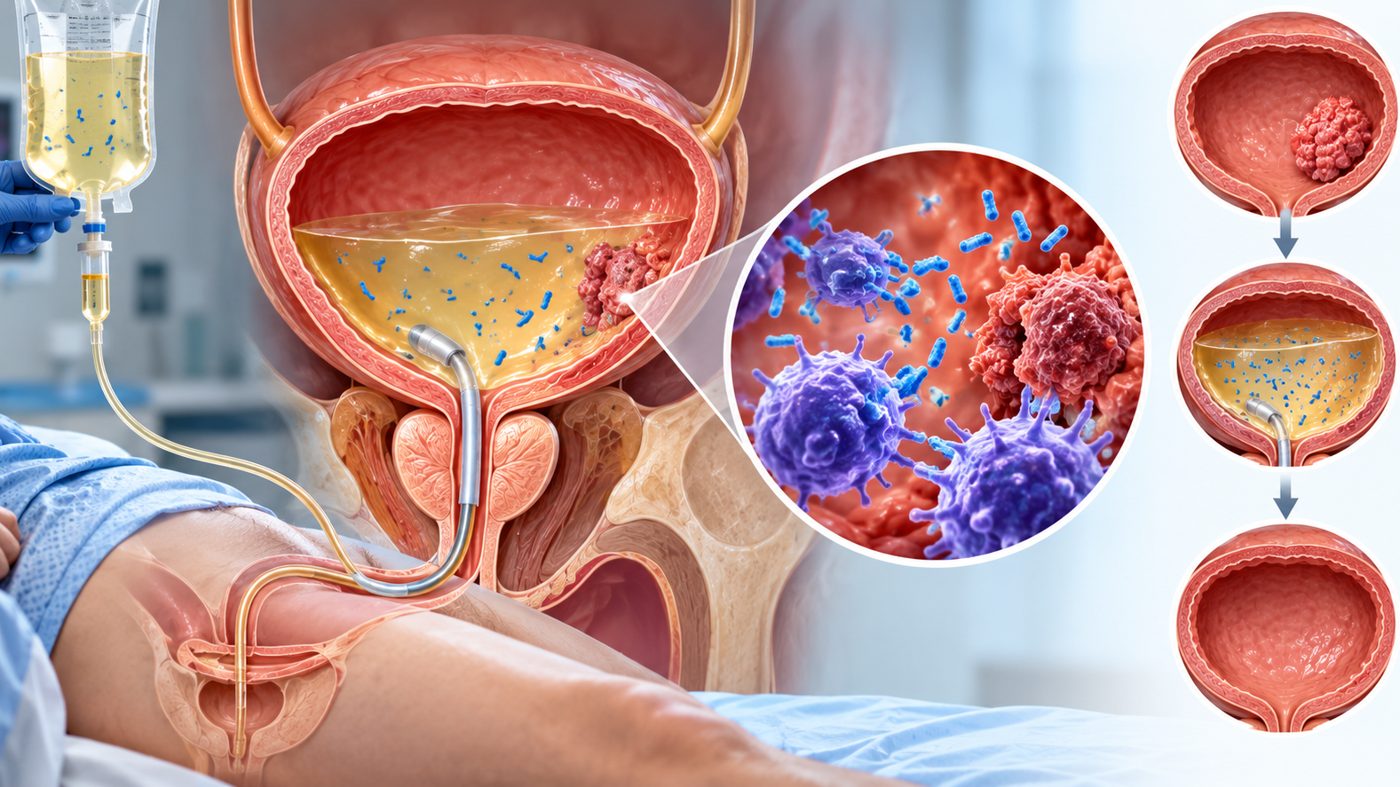
Some non-muscle-invasive tumours benefit from medicine given directly into the bladder, either local chemotherapy or immunotherapy with BCG. The type and length of treatment depend on the risk category, and not every patient needs the same plan. In some very high-risk cases, early surgery to remove the bladder may also be discussed.
What muscle invasion means
When the tumour has reached the bladder muscle, the plan changes: the case needs assessment for spread and discussion by a specialist multidisciplinary team. For suitable patients, the options include removing the bladder (radical cystectomy) together with drug treatments linked to the surgical plan, or, in selected cases, keeping the bladder with combined treatment.
Follow-up is part of treatment
Bladder tumours can come back or progress, so the schedule of cystoscopies and tests is set according to your level of risk. Ask for a written explanation of the grade, the stage and the next step. Hearing that "the tumour was completely removed" is reassuring, but it is no substitute for understanding the pathology report and your follow-up plan.
This article is general health education and doesn't replace a consultation with your doctor.