
After a bladder tumour has been removed, you may be asked to come back for treatment sessions inside the bladder. That doesn't automatically mean the operation failed: the aim may be to lower the chance of the disease returning or progressing, depending on its characteristics. To understand your plan, link the name of the medicine to your pathology report and risk category, rather than comparing your number of sessions with another patient's.
How the treatment is given
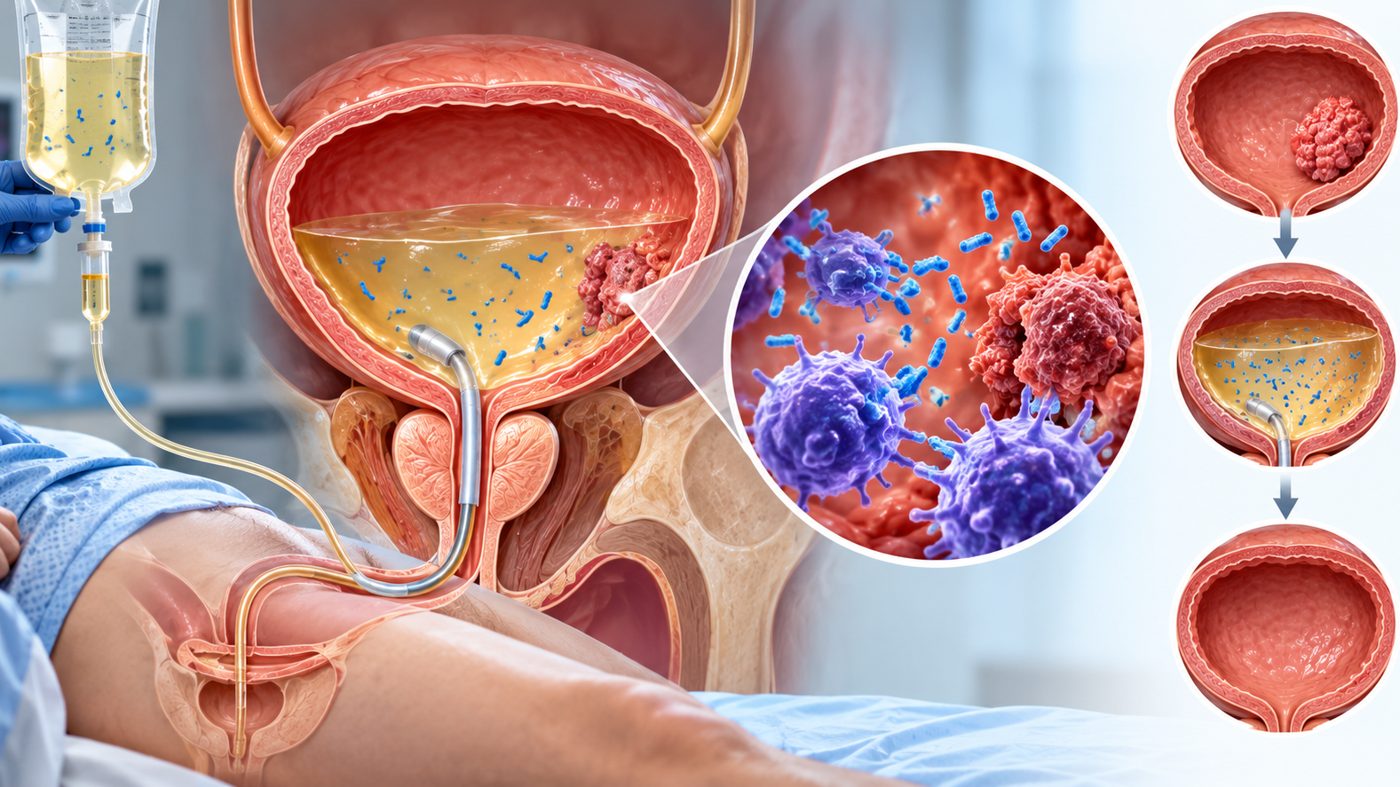
The medicine is passed into the bladder through a catheter, left there for a time set by your care team, then emptied out as instructed. This is different from treatment given into a vein. The options include local chemotherapy and immunotherapy such as BCG, which stimulates an immune response against the tumour cells.
Why plans differ
Local chemotherapy may suit some patients, while BCG is used in suitable cases at higher risk or with carcinoma in situ. The plan also depends on the stage and grade, the number and size of the tumours, and how often they have come back before. It may include an induction course followed by maintenance sessions, when the benefit justifies them and they can be tolerated.
Before each session
Tell your team if you have a fever, symptoms of a urinary infection, or visible blood in your urine. A BCG session may be postponed if you have a symptomatic infection, visible bleeding, or an injury from the catheter, and it is timed appropriately after the tumour removal. Mention any immune conditions, and any treatment that suppresses the immune system, before you start.
Expected symptoms and warning signs
Burning, frequent urination and some temporary discomfort can occur.
But a high or persistent fever, chills or feeling very unwell need urgent contact with your care team, because BCG can rarely cause complications that affect the whole body.
Ask for written instructions on handling your urine after each session, and on the symptoms that mean you should be seen.
If the tumour comes back
The grade, stage, previous treatment and how well it worked are reassessed. Other options may be discussed, including removing the bladder in suitable cases, rather than repeating the same treatment indefinitely. Follow-up cystoscopies remain important even when you have no symptoms. The benefit of the sessions isn't measured by how you feel day to day, but by your follow-up results and a lower risk of the disease returning or progressing.
This article is general health education and doesn't replace a consultation with your doctor.